ClimateFisheries.org


Motivation
Marine biodiversity and fisheries are being impacted by climate change. There is a need for people to know about the foreseen impacts under contrasting futures with different greenhouse gas emissions. Such knowledge can help stimulate actions to support climate mitigation and adaptation.
The aim of this website is to provide easily-accessible platform to share intuitive and representative indicators of climate risks and future impacts on global and regional marine biodiversity and fisheries.
This website is regularly being updated and expanded to provide the latest knowledge about the topic.
About
This website represents future risks and project impacts of climate change on global marine ecosystems and fisheries through two sets of indicators.
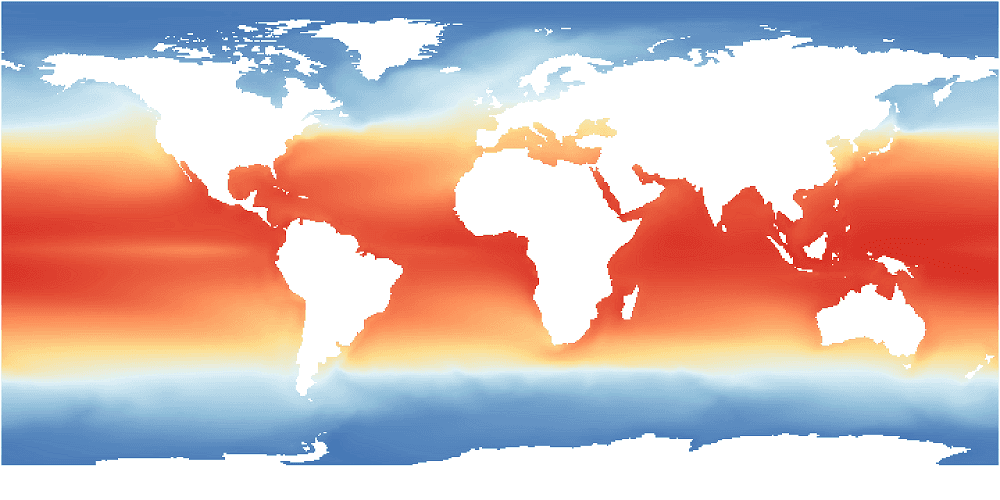
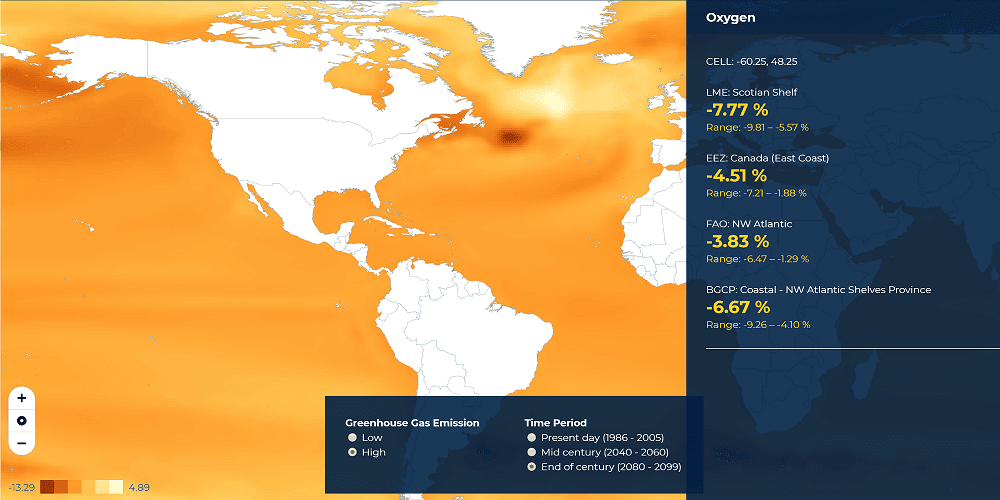
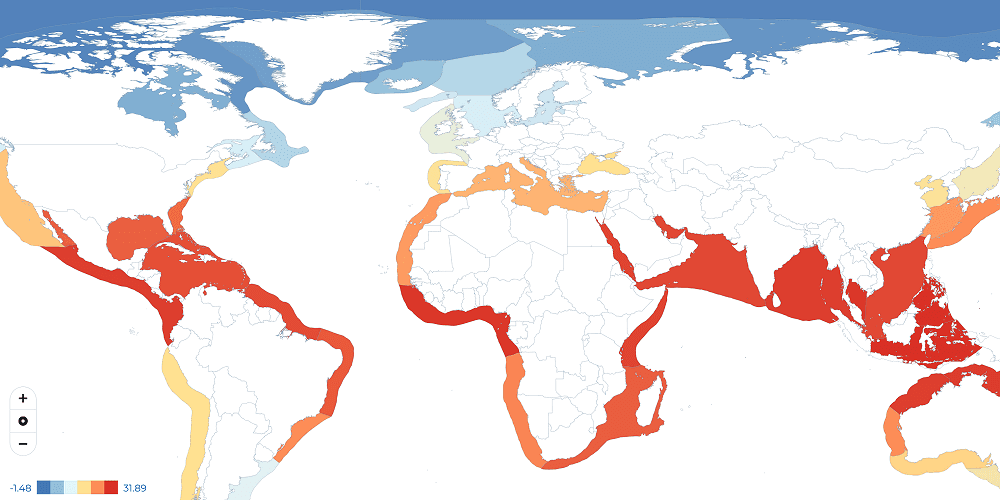
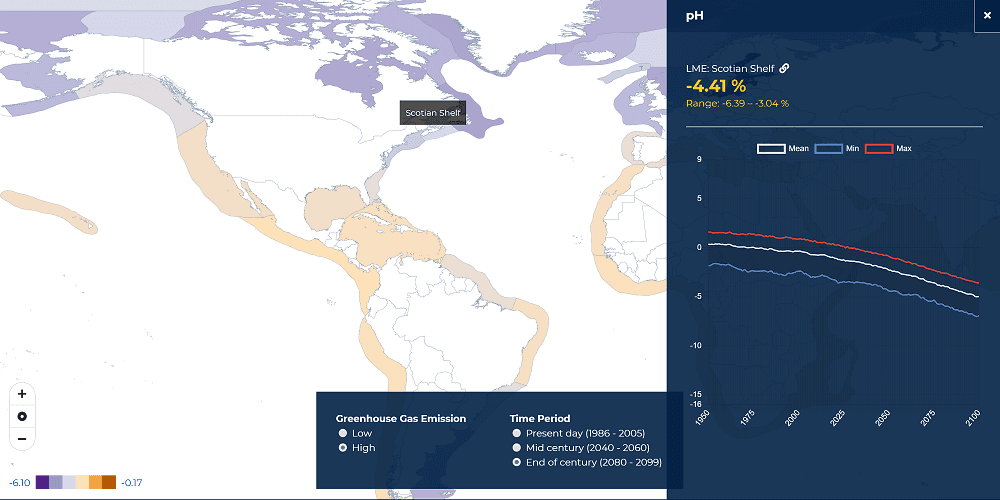
The first set of indicators represent climate hazards for marine ecosystems. These indicators include the projected changes in the intensity of the major climate stressors in the ocean. These stressors include temperature, oxygen level, acidity (pH) and changes in net primary production.
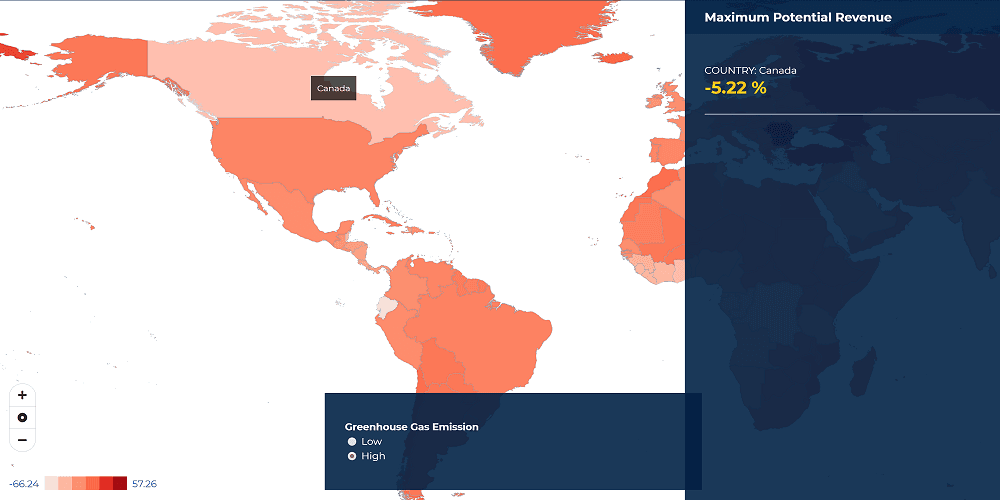
The second set of indicators represent the project risks and impacts on marine ecosystems and fisheries. Since climate stressors may interact in posing hazards and risks on ecosystems and fisheries, an indicator (multi-stressor index) is presented to represent the combined hazards of these climate stressors. Other indicators include changes species turnover (representing changes in species composition), maximum catch potential and changes in maximum fisheries revenues.
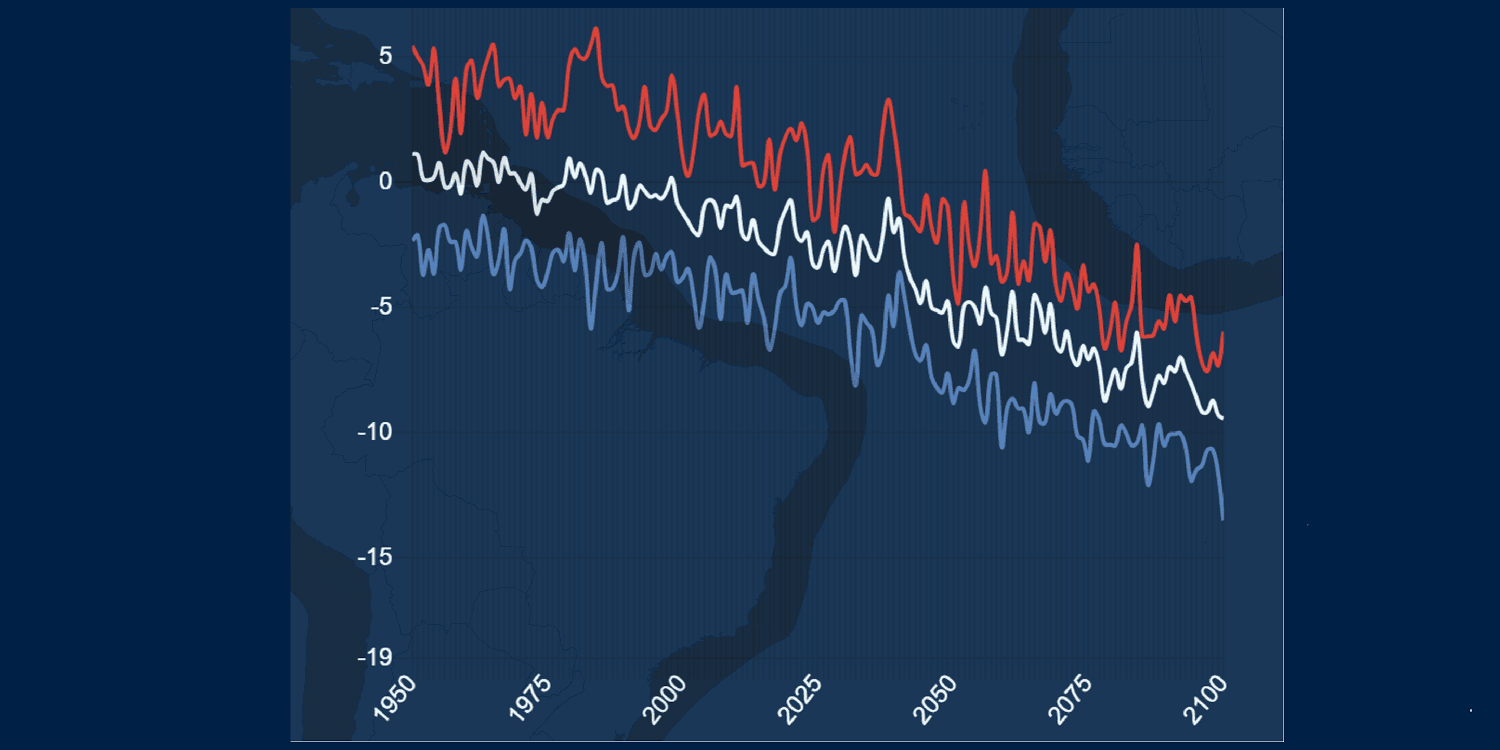
Two future time frames (the mid- and end- of 21st century) and two climate change scenarios are presented to provide contrasting ocean futures.
Contact Us
Reference Citing
Please cite the data that are presented in this website.
Lam VWY, Cheung WWL, Reygondeau G, Sumaila UR. Projected change in global fisheries revenues under climate change. Sci Rep. 2016;6:32607.
Cheung WWL, Reygondeau G, Frölicher TL. Large benefits to marine fisheries of meeting the 1.5 C global warming target. Science (80- ). 2016;354(6319):1591–4.
Cheung WWL, Jones MC, Reygondeau G, Frölicher TL. Opportunities for climate-risk reduction through effective fisheries management. Glob Chang Biol. 2018;24(11):5149–63.
Jones MC, Cheung WWL. Using fuzzy logic to determine the vulnerability of marine species to climate change. Glob Chang Biol. 2018;24(2):e719--e731.
Cheung WWL, Reygondeau G, Frölicher TL. Large benefits to marine fisheries of meeting the 1.5 C global warming target. Science (80- ). 2016;354(6319):1591–4.
Cheung, WWL and Lam, V.W.Y. Editors. 2019. Climate-Fisheries Data Service. World Wide Web electronic publication. xxxx, version (02/2019).
Acknowledgements